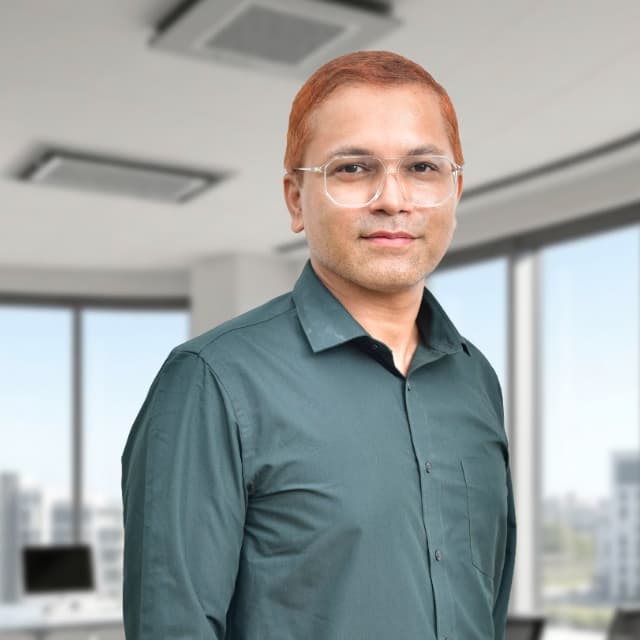
Rahul Kanyal
Assistant Professor
| Education | Specialization |
|---|---|
| Information Systems & Analytics |
| Area of Interest | Contact |
| Information Systems & Analytics | rahul.k@imibh.edu.in |
Having held key positions in two of India’s top organizations, Prof. Rahul Kanyal brings valuable industry experience in technology-driven management, with a strong focus on cloud computing, Internet of Things (IoT), sensor-based systems, and digital transformation strategies.
At Bharat Heavy Electricals Limited (BHEL) in Ranipet, Tamil Nadu, he began his career as a Production Engineer. In this high-capacity industrial setting, he managed manufacturing operations, ensured process efficiency, and upheld product quality. This foundational experience has been instrumental in shaping his understanding of modern manufacturing paradigms, including Industry 4.0 practices such as predictive maintenance and data-driven process optimization.
Later, he worked at Tata Motors Limited's R&D Center in Pune as Senior Manager of Crash and Safety. Using cloud-based simulation platforms like LS-DYNA and HyperMesh for virtual testing and finite element modeling, Prof. Kanyal worked on the structural integrity and crashworthiness of automobiles in this capacity. In order to improve vehicle safety standards and validate simulation results, he worked on analyzing sensor data from crash tests. He was actively involved in cooperative, simulation-driven product development, where project execution was greatly aided by the incorporation of digital tools and organized information management.
Prof. Kanyal’s interests lie in the design of decision support systems for managerial decision-making, machine and deep learning- based frameworks, application of reinforcement learning, decision modelling, and data-driven optimization.